Higher wages don’t have to mean higher inflation. That could matter for Bitcoin
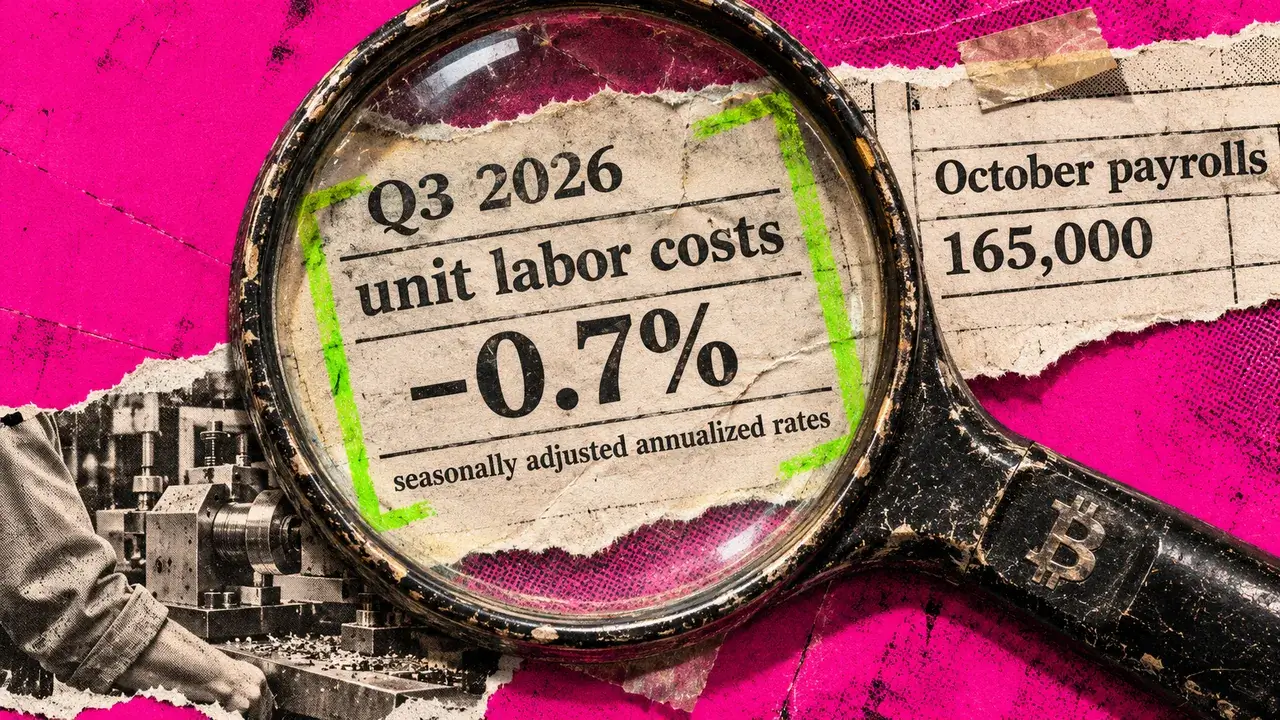
Image: CryptoSlate
US nonfarm businesses produced more per hour in the third quarter, allowing labor costs per unit of output to fall even as hourly compensation rose. For Bitcoin, that offers a potential offset to jobs-driven rate fears: if lower cost pressure helps cool inflation and expected interest rates, financing could become less expensive. The Bureau of Labor Statistics' preliminary November 5 release showed nonfarm business productivity rising 3.6% as output increased 3.7% and hours worked rose 0.1%. Hourly compensation increased 2.9%, while unit labor costs fell 0.7%. All those quarterly changes are seasonally adjusted annualized rates. Unit labor costs track compensation relative to output. BLS divides hourly compensation by productivity: when each hour produces more, businesses can pay more per hour without incurring higher labor costs for each unit they produce.
Read the full story on CryptoSlateBeCrypto News shows a short excerpt and links to the publisher. The full report belongs to CryptoSlate.