Bitcoin Energy Consumption Statistics: How Much Power Does Bitcoin Really Use?
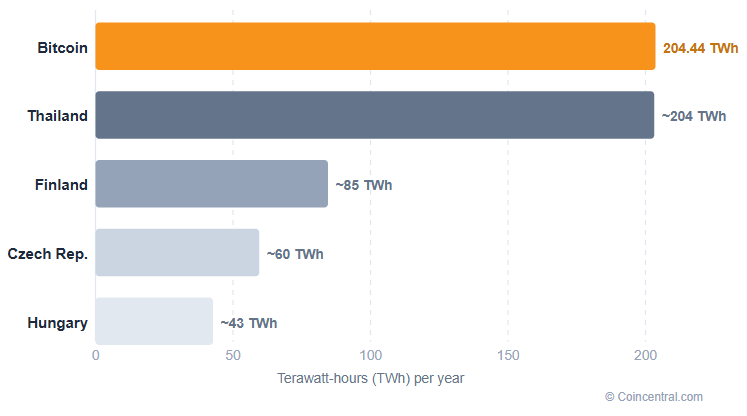
Image: CoinCentral
Bitcoin is the world’s largest cryptocurrency by market value. It is also one of the most energy-intensive computing networks on the planet. The energy demand comes from Bitcoin’s mining process, called Proof of Work. Miners run powerful computers around the clock to validate transactions and earn newly created coins. That constant computation draws enormous amounts of electricity. This article pulls together the latest data on Bitcoin’s energy footprint. It covers electricity use, carbon emissions, water consumption, electronic waste, and how Bitcoin compares to traditional payment systems and other industries. Bitcoin’s Energy Use at a Glance Bitcoin’s network consumes an estimated 204.44 terawatt-hours (TWh) of electricity every year. That is roughly equal to the annual power consumption of Thailand, a country of 72 million people.
Read the full story on CoinCentralBeCrypto News shows a short excerpt and links to the publisher. The full report belongs to CoinCentral.